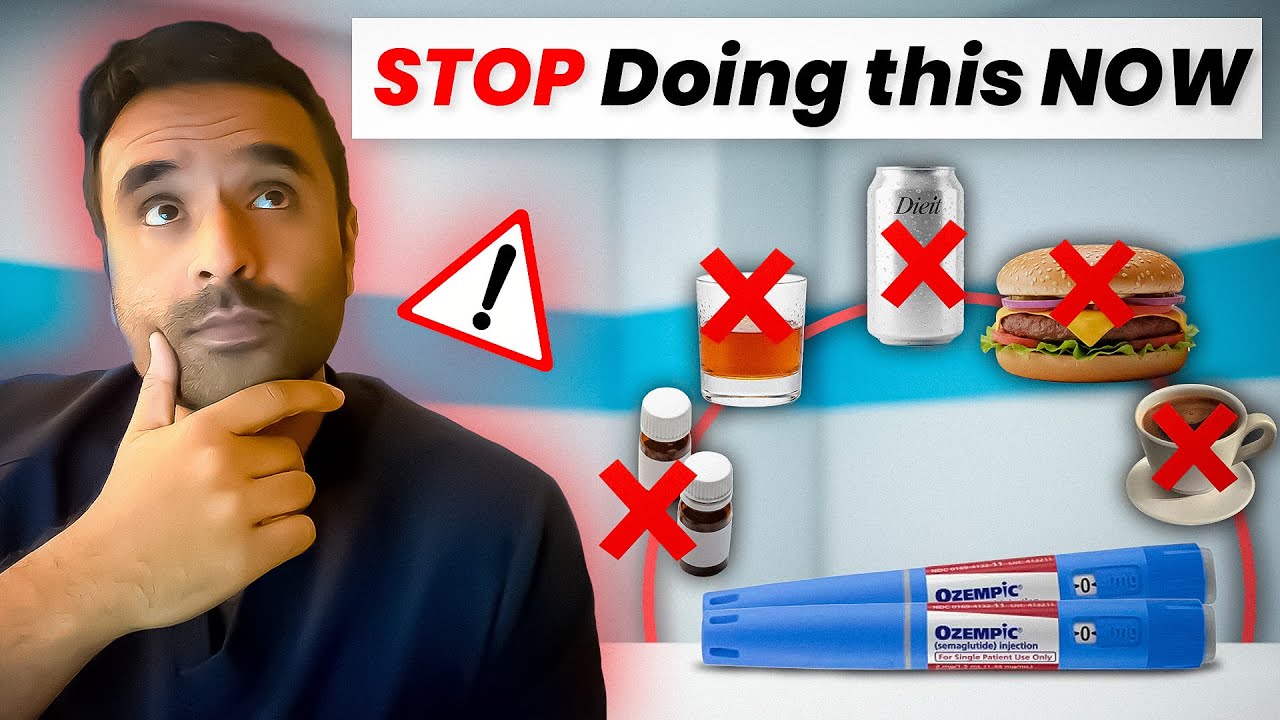
Kevin Joseph knew what GLP-1s did. He'd prescribed them hundreds of times. He'd taken them himself, tracked the scale from 350 lb down to 200. But the scariest moments in two years on the drug weren't the injections or the nausea or the stalls.
They were the patients who showed up in the hospital after mixing their GLP-1 with the wrong thing. The one on Lasix who ended up in acute kidney failure. The one who stacked two GLP-1s and couldn't keep food down for a week. The one whose thyroid went haywire because her Synthroid stopped absorbing.
"This isn't to scare you," he says. "GLP-1s are one of the most powerful tools we've ever had. But it's not something to take lightly." What follows are the 10 things he tells every patient never to mix with Ozempic, Mounjaro or any other GLP-1. And the pharmacologic reason why each one can turn dangerous.
1. Alcohol, especially binge drinking
GLP-1s slow gastric emptying. Food and liquids pass through your GI tract slower, which is why you feel full faster. It also means more alcohol gets absorbed.
The same amount you used to drink may now hit harder and faster. But the bigger risk is hypoglycemia. GLP-1s increase insulin and reduce glucagon. Alcohol blocks your liver's ability to make glucose. Together, your blood sugar can drop dangerously low, especially if you're also on insulin or a sulfonylurea.
Both alcohol and GLP-1s can irritate the pancreas. Combined, the risk for pancreatitis goes up. Pancreatitis can be life threatening.
If you drink, keep it moderate and always pair it with food.
The same amount of alcohol you used to drink in the past is now hitting you a lot harder and faster. It's because more of it is being absorbed.Dr. Kevin Joseph, DO
Why this matters if you haven’t started yet: If you notice you feel drunk faster on a GLP-1, this is why. Your body is absorbing more, not metabolizing it differently.
2. Insulin or sulfonylureas without adjusting the dose
Sulfonylureas are medications like glipizide or glyburide that force your pancreas to secrete insulin even when your blood sugar is normal or low. Joseph hates them. "They can cause severe hypoglycemia, which can be deadly."
GLP-1s already boost insulin release, but only when your blood sugar is high. Stack them with insulin or a sulfonylurea, and you're stimulating insulin from two different mechanisms. Low blood sugar becomes a real risk.
GLP-1s by themselves rarely cause hypoglycemia. But when combined with other glucose-lowering drugs, they absolutely can.
If your GLP-1 is helping control your type 2 diabetes, talk to your doctor. You may be able to stop the sulfonylurea completely and lower your insulin dose.
Sulfonylureas are a horrible medication. I truly don't like them.Dr. Kevin Joseph, DO
Why this matters if you haven’t started yet: If you're on both a GLP-1 and a sulfonylurea or insulin, your doses likely need adjusting. Don't wait for a low blood sugar episode to find out.
3. High fat meals and fast food
GLP-1s already delay gastric emptying. When you eat heavy, greasy, high fat meals, you amplify that effect. You can end up with severe nausea, reflux, bloating and vomiting.
Fatty foods trigger a hormone called cholecystokinin, or CCK, which contracts your gallbladder and slows gastric emptying even more. GLP-1s also reduce bile flow, which can contribute to gallstone formation when combined with high fat diets.
Prioritize lean proteins, complex carbs and healthy fats instead of large greasy meals.
Why this matters if you haven’t started yet: This is why the burger and fries that used to be fine now make you feel sick for hours. It's not just the GLP-1. It's the combination.
4. Artificial sweeteners and diet drinks
Artificial sweeteners like sucralose and aspartame alter your gut microbiome, reducing good bacteria. Polyols like erythritol and sorbitol, common in sugar free foods, are poorly absorbed osmotic agents.
Combined with the GLP-1's delayed gastric emptying, they can ferment in the gut, leading to bloating, cramping and diarrhea.
Skip the diet sodas and sugar free candies. Go for plain water or sparkling water if you need the carbonation.
5. Oral medications with a narrow therapeutic window
Think Synthroid, digoxin, Coumadin or warfarin. GLP-1s change how fast your stomach empties, which affects how quickly pills are absorbed. For drugs that rely on stable absorption, like thyroid medication or birth control, this can mean reduced effectiveness.
Joseph has seen it over and over with Synthroid. Patients start Ozempic or Mounjaro, and their TSH levels climb. The Synthroid isn't being absorbed properly anymore.
"It's such an annoying medication because there are so many variables that can interfere with its absorption, including meal timing."
Separate sensitive meds by several hours from your next meal or injection. Talk to your provider about monitoring your labs closely.
I've had so many patients who have noticed that their TSH levels are higher after starting Ozempic or Mounjaro. And that's because the Synthroid they are taking is probably not being absorbed properly.Dr. Kevin Joseph, DO
Why this matters if you haven’t started yet: If you take thyroid medication, birth control or blood thinners, ask your doctor about timing and lab monitoring before you start a GLP-1.
6. Medications that slow gut motility
Opioids, anticholinergics, antihistamines, tricyclic antidepressants. All of these slow gut motility just like GLP-1s do. When used together, they can cause extreme gastroparesis, meaning food sits in the stomach for hours.
At the physiologic level, GLP-1s inhibit vagal nerve signaling to the stomach's pacemaker cells, reducing peristalsis. Stack that with other motility suppressing drugs, and you're looking at nausea, vomiting and early satiety so severe it can interfere with nutrition.
If you already struggle with gastroparesis or severe reflux, this combination can make it a million times worse.
7. SSRIs and other serotonin drugs
SSRIs like sertraline or fluoxetine commonly cause nausea and decreased appetite. When combined with a GLP-1, these effects stack, sometimes leading to severe loss of appetite or malnutrition.
The bigger concern is how the combination affects brain chemistry. Both medications act on the hypothalamus and serotonin receptors, enhancing satiety signals and suppressing dopamine. That's why there have been increased reports of depression in certain patients on GLP-1s.
You may eat less, but you can also feel more fatigued, emotionally flat or nauseated.
If you notice changes in your mental health, talk to your provider immediately.
Why this matters if you haven’t started yet: Depression and emotional flatness are not normal side effects. If you're on an SSRI and a GLP-1 and you start feeling this way, it's worth a conversation with your doctor.
8. Caffeine, especially in the first 8 weeks
Joseph consumes 200 to 600 milligrams of caffeine a day. He knows he needs to stop. But he also knows a lot of his patients report issues with caffeine when they first start a GLP-1 or soon after they increase their dose.
GLP-1s delay gastric emptying. Caffeine stimulates gastric acid secretion and increases catecholamine release, especially epinephrine and norepinephrine. This causes food and stomach acid to linger longer, which can worsen heartburn and nausea.
The result is the dreaded sulfur burps, especially in the first 4 to 8 weeks of dose escalation or starting the medication.
Everyone's experience is different. Some people tolerate caffeine fine. Others don't. It comes down to trial and error.
I personally consume anywhere from 200 to 600 milligrams of caffeine a day. I know I need to stop, but I'm trying to work on it.Dr. Kevin Joseph, DO
Why this matters if you haven’t started yet: If coffee suddenly makes you nauseous or gives you heartburn after starting a GLP-1, this is the mechanism. You're not imagining it.
9. Diuretics like Lasix, hydrochlorothiazide or spironolactone
Diuretics are prescribed for heart failure or blood pressure control. The goal is to intentionally lose water or volume. GLP-1s can cause nausea, vomiting and diarrhea, all of which also increase fluid loss.
Combine the two, and you have a recipe for electrolyte imbalance or acute kidney injury. Volume depletion triggers your body's renin angiotensin aldosterone pathway, increasing aldosterone and vasoconstriction, putting strain on your kidneys.
Stay hydrated. Get periodic kidney function tests, especially if you're on both a GLP-1 and a diuretic.
Why this matters if you haven’t started yet: If you're on a diuretic and starting a GLP-1, dehydration is not a minor side effect. It can land you in the hospital with kidney damage.
10. Stacking GLP-1 agonists
Joseph sees this more and more. Patients who lose effectiveness with semaglutide want to add tirzepatide. Or patients who started on retatrutide, see minimal appetite suppression, and want to combine it with tirzepatide because they had great results on it before.
"This is a recipe for disaster."
GLP-1 stacking, using more than one GLP-1 based medication at a time like semaglutide plus tirzepatide, dangerously amplifies side effects. These drugs act on the same receptor and signaling pathway. Excessive GLP-1 receptor stimulation causes prolonged insulin release, suppressed glucagon and delayed gastric emptying, leading to severe nausea, vomiting and even gastroparesis.
It also heightens the risk of hypoglycemia, pancreatitis and gallbladder dysfunction. When dual or triple agonists are combined, receptor cross talk further disrupts glucose balance and gut motility.
Stick with one GLP-1 agonist at a time. Only switch under the guidance of a medical provider.
Why this matters if you haven’t started yet: If one GLP-1 stops working, the answer is not to add another. It's to switch, adjust the dose or address what else is going on. Stacking them is dangerous.
Notice what is not on the list: the drug itself. Not the dose, not the brand, not the pen. Every one of these 10 risks is something that happens when you combine the injection with something else, which is also why every one of them is avoidable if you know what to watch for.
The goal isn't just to lose weight. It's to understand how this medication interacts with the rest of your body and lifestyle so you can use it safely long term. As long as you listen to your body and have someone watching over your GLP-1 routine and lab work, Joseph says, your metabolic health and overall wellness will improve.
Questions people ask
Can I drink alcohol on Ozempic or Mounjaro?
Yes, but keep it moderate and always pair it with food. GLP-1s slow gastric emptying, so alcohol is absorbed more, hitting you harder and faster. Combined with the blood sugar lowering effect of both alcohol and GLP-1s, you risk dangerous hypoglycemia and increased risk of pancreatitis.
Why does coffee make me nauseous on a GLP-1?
Caffeine stimulates gastric acid secretion while GLP-1s delay gastric emptying. This causes food and stomach acid to linger longer, which can worsen heartburn, nausea and sulfur burps, especially in the first 4 to 8 weeks of starting or increasing your dose.
Can I take two GLP-1 medications at the same time?
No. Stacking GLP-1s like semaglutide plus tirzepatide dangerously amplifies side effects because they act on the same receptor. This can cause severe nausea, vomiting, gastroparesis, hypoglycemia and increased risk of pancreatitis. Stick with one GLP-1 at a time and only switch under medical supervision.
Dr. Kevin Joseph is an internal medicine physician and hospitalist who lost 150 pounds using GLP-1 therapy. He prescribes Ozempic, Mounjaro and other GLP-1 medications to patients daily. 425,977 views on the original video.
Watch the original on YouTube →